The Plaid Studio / What to create / Glen check
Glen check pattern generator
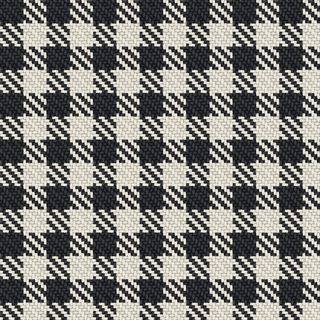
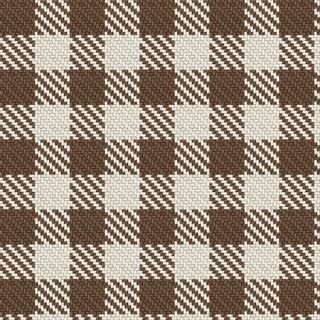
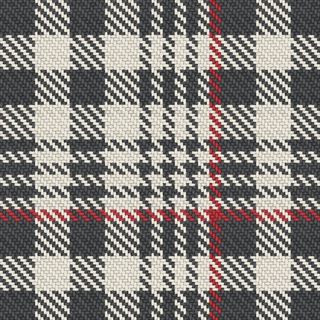
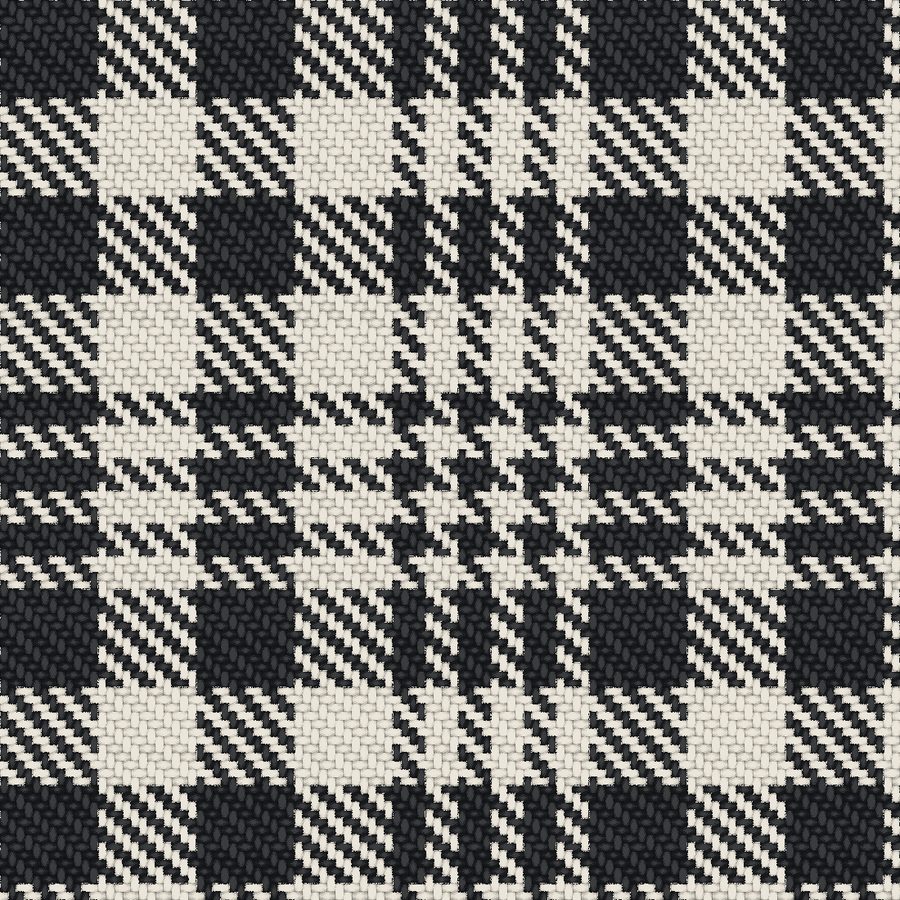
Glen check — Glenurquhart, after the glen it came from — puts two checks in one sett: a coarse twelve-and-twelve next to a fine four-and-four. The alternation is the pattern, and it is why a glen check reads as woven cloth even in a flat print: no drawn pattern arranges itself that way by accident.
- Thread count
G12 F12 G12 F12 G4 F4 G4 F4 G4 F4 - Weave2/2 twill
- SymmetryRepeating straight round
- SeamlessYes — the tile repeats by construction, in every engine
- ExportPNG and SVG, A4 spec sheet with a centimetre ruler, WIF weaving draft
What makes it glen check
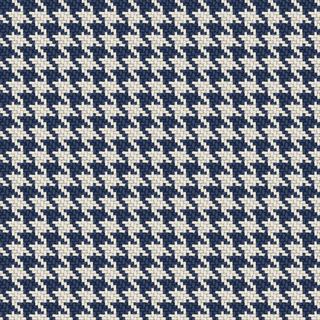
Twelve and twelve twice, then four and four three times, on a 2/2 twill, mirrored in the weft. The fine band is exactly the shepherd's unit, so the cloth carries a dogtooth inside a larger check.
Suiting, jackets, trousering. In grey and cream it is the most quoted menswear check there is.
How to make one
- Open the Sett engine and pick glen check from the ready-made checks in the panel. The studio writes its thread count into the cloth for you.
- Put your colours on it. Choose a palette or paste your own hex codes; the ground, the field and the lines take their colours in that order.
- Set the scale in threads. The bands are threads, not pixels, so the check keeps its proportions when you change the yarn count or the repeat width.
- Export what the job needs. A seamless PNG for print-on-demand, an SVG for vector work, an A4 sheet with a ruler for a mill, or a WIF draft for a loom.
Questions
Is glen check the same as Prince of Wales?
Nearly. A Prince of Wales check is a glen check with a coloured overcheck laid over it — usually a fine line in red, blue or rust.
Why does the pattern look like a ladder?
Because the coarse and fine bands alternate. The eye reads the run of fine bands as a step between the big squares.