
The Plaid Studio / What to create / Textile
Textile pattern generator: weave motifs as a print
The family that borrows from the loom: herringbone, houndstooth, kilim steps, ikat, dobby and the rest, drawn as a print rather than woven. Where the Sett engine interlaces threads, these sample the motif over a tile — so a kilim step can be any size and any colour, and still meets itself at the edges.
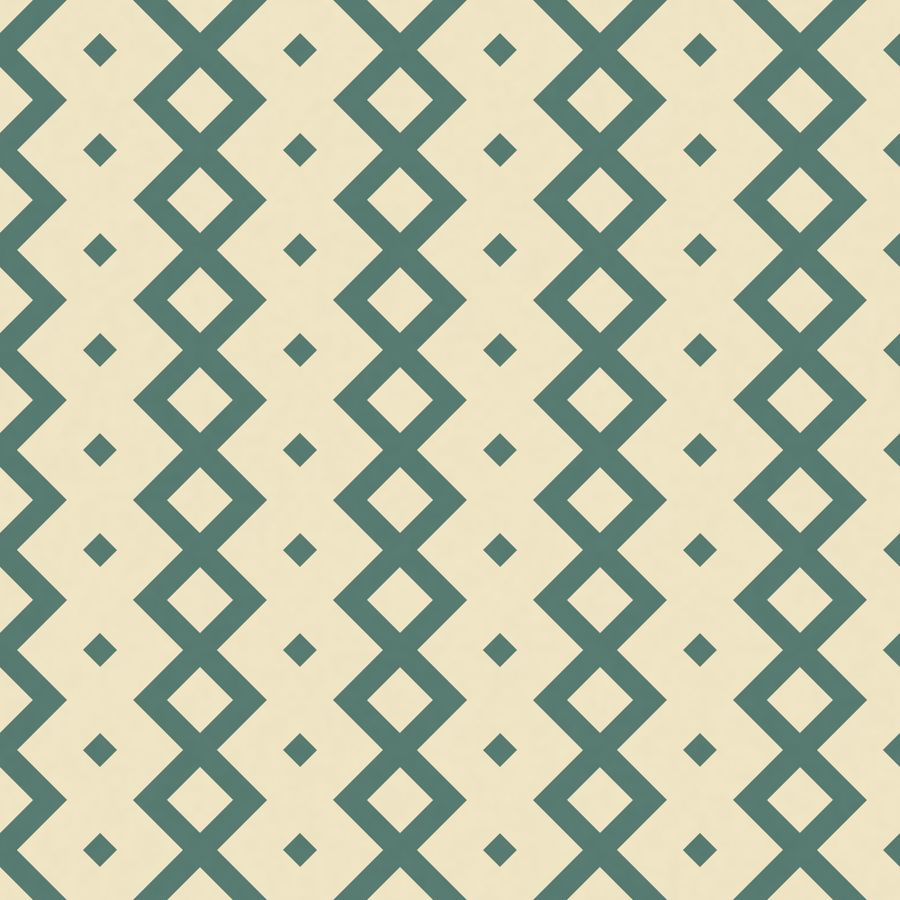
Herringbone — a weave motif, drawn by the GeoPrint engine 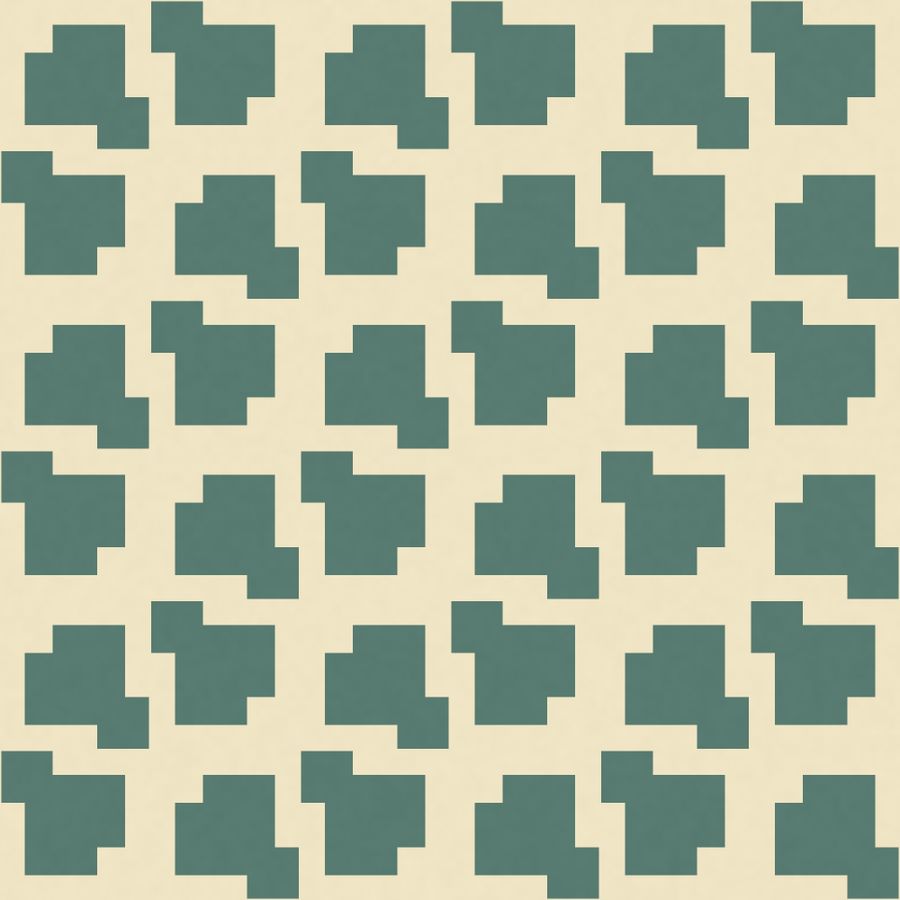
Houndstooth — a check motif, drawn by the GeoPrint engine 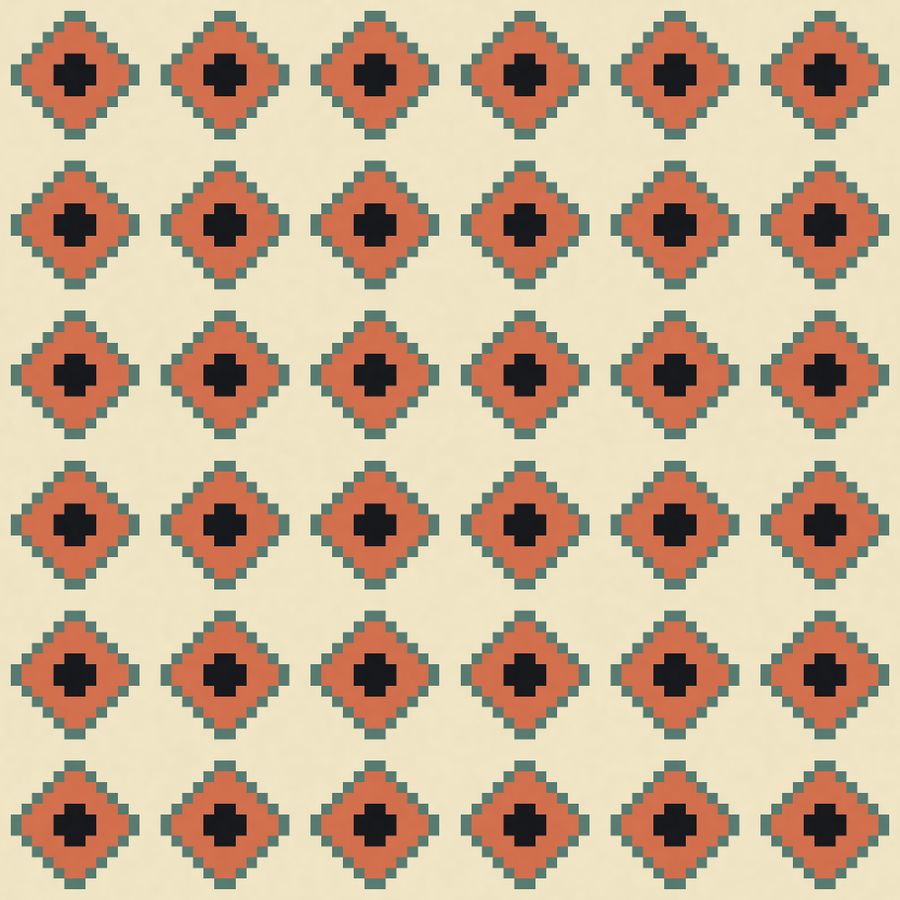
Kilim Steps — a flatweave motif, drawn by the GeoPrint engine
Every pattern in the family
Read out of the engine itself — 34 patterns, each with the motif it is built from:
- Herringbone Weave
- Houndstooth Check
- Kilim Steps Flatweave
- Plaid Tartan Plaid
- Argyle Diamond
- Basket Weave Weave
- Ikat Diamond Ikat
- Pinwheel Block
- Plain Weave Weave
- Paisley Boteh Boteh
- Sashiko Stitch Stitch
- Woven Dashes Weave
- Gingham Check
- Glen Plaid Check
- Windowpane Check
- Parquet Weave
- Rib Knit Knit
- Jersey Stitch Knit
- Aran Cable Knit
- Seed Stitch Knit
- Itajime Shibori Shibori
- Arashi Shibori Shibori
- Seersucker Pucker
- Corduroy Wale
- Cane Webbing Weave
- Ladder Band Kilim
- Stepped Cross Kilim
- Bird's Eye Dobby
- Mudcloth Bands Bogolan
- Fair Isle Band Knit
- Smocking Gather
- Eyelet Broderie
- Log Cabin Patchwork
- Seminole Band Patchwork
What it is for
Furnishing prints, scarves and linings that want a woven look without a woven structure; and backgrounds where a real weave would be too busy.
How to use it
- Open GeoPrint and pick the family, then the pattern — or describe what you want in a few words and let the engine choose.
- Put your palette on it. The inks come from the palette, so one pattern gives a whole range without redrawing anything.
- Set the repeat width in centimetres and check it against the ruler on the stage: what you see is the size it prints.
- Export a seamless tile as PNG or SVG, or an A4 sheet with a centimetre ruler for a printer.
Questions
How many textile patterns are there?
34 in this family, listed above, out of 168 in the GeoPrint engine. Each one takes your palette, your scale and your repeat size, so the count is the starting point rather than the limit.
Are the patterns really seamless?
Yes, by construction: the pattern is sampled on a torus, so the tile meets itself exactly at every edge. Nothing is cropped or mirrored to fake a join.
Can I set the repeat size in centimetres?
Yes. The repeat width is a setting, the ruler along the stage measures it, and the export carries it — which is what a printer asks for.
What does it cost?
Looking is free on every plan. Exporting a GeoPrint tile is part of Pro and Studio; the free tier exports from the Sett engine, and no plan puts a watermark on a file.
 Geometric
 Deco
Deco Modern
 Abstract
 Wallpaper
 Organic
 Circles
 Stripe
 Nature